Why Manufacturers Choose 3-Piece Forged Wheels for Lightweight & Modular Flexibility
Modern automotive manufacturing demands exceptional performance standards while maintaining cost efficiency and design flexibility. Industry leaders increasingly turn to advanced wheel technologies that deliver superior strength-to-weight ratios without compromising customization capabilities. The evolution of wheel manufacturing has led to sophisticated solutions that address both performance requirements and production scalability challenges.
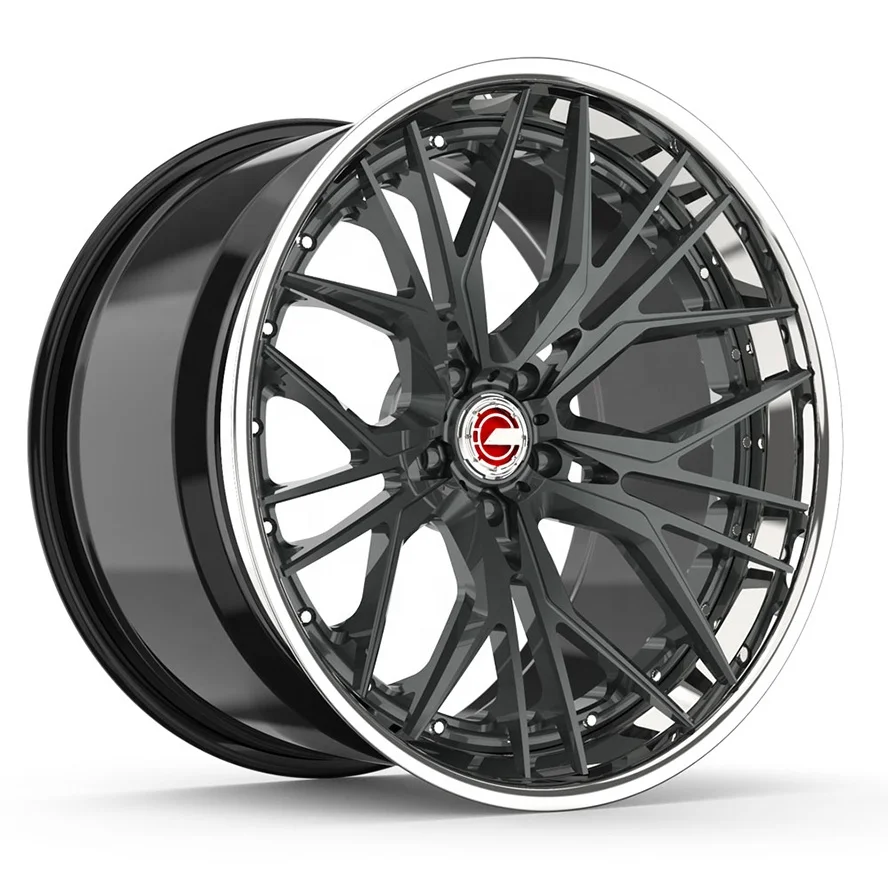
Manufacturing excellence in wheel production requires balancing multiple engineering considerations including material optimization, structural integrity, and production efficiency. Contemporary automotive suppliers recognize that traditional manufacturing approaches often fall short of meeting today's demanding specifications. Advanced forging techniques combined with modular design principles create opportunities for unprecedented customization while maintaining rigorous quality standards.
The automotive industry's shift toward lightweight components has driven innovation in wheel manufacturing processes. Engineers continuously seek solutions that reduce unsprung weight while enhancing vehicle dynamics and fuel efficiency. These requirements have established new benchmarks for wheel performance that extend beyond basic functionality to encompass advanced engineering principles.
Engineering Advantages of Multi-Piece Construction
Material Optimization Through Segmented Design
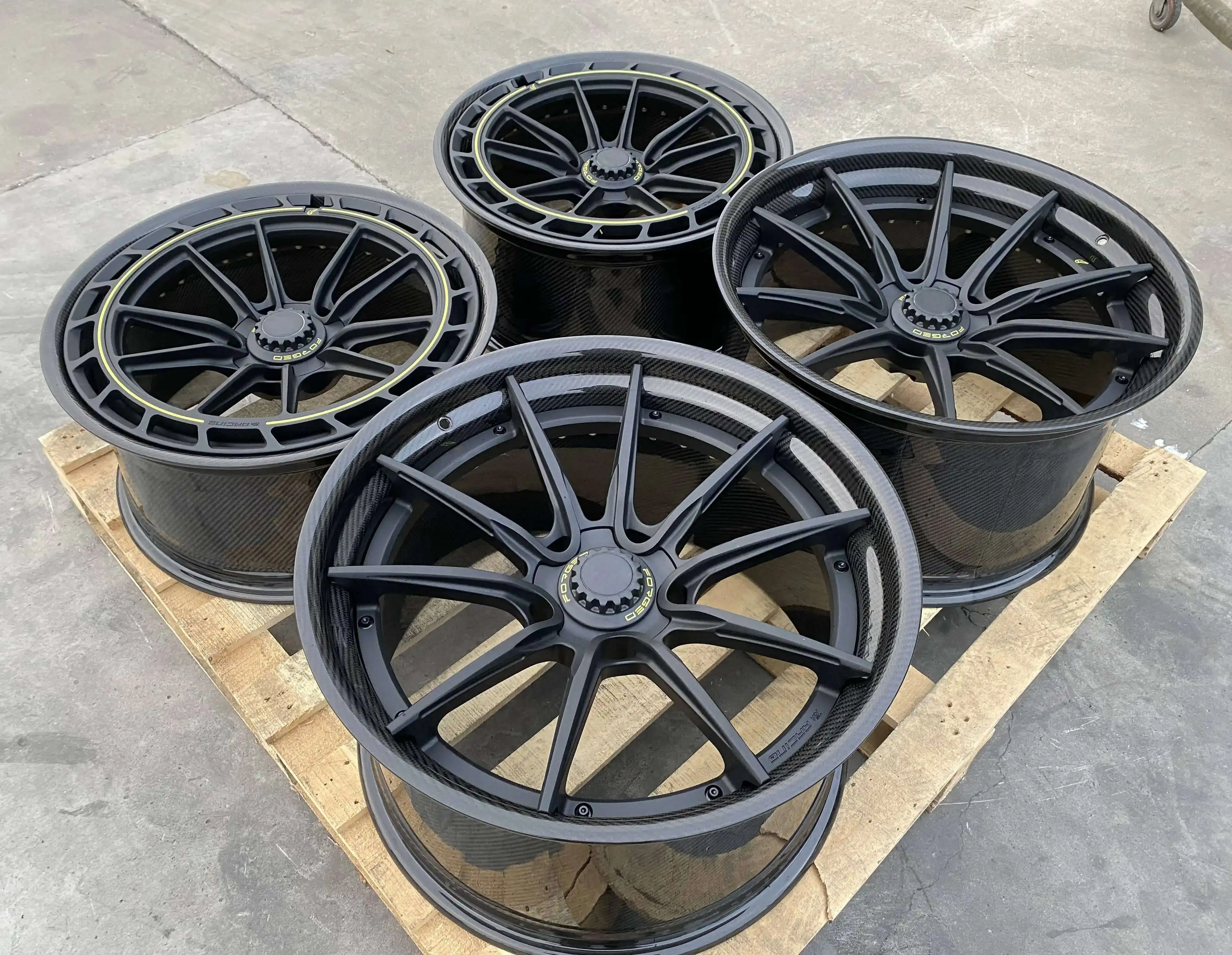
Multi-piece wheel construction enables manufacturers to optimize material selection for each component based on specific performance requirements. The center section typically utilizes high-strength aluminum alloys engineered for maximum load distribution, while outer rim sections can incorporate different alloy compositions optimized for durability and weight reduction. This segmented approach allows engineers to fine-tune material properties throughout the wheel assembly.
Advanced forging processes create grain structures that align with stress patterns, resulting in superior mechanical properties compared to cast alternatives. The controlled deformation during forging eliminates porosity while creating optimal material flow patterns. This manufacturing approach produces components with enhanced fatigue resistance and improved impact tolerance.
Material utilization efficiency improves significantly through multi-piece construction methodologies. Manufacturers can minimize waste by producing standardized center sections while varying outer rim dimensions to accommodate different vehicle specifications. This approach reduces inventory complexity while maintaining broad application compatibility.
Structural Integrity and Load Distribution
The mechanical advantages of segmented wheel construction become evident through advanced stress analysis and real-world testing scenarios. Load paths distribute more evenly across multiple connection points, reducing stress concentrations that typically occur in single-piece designs. This distribution pattern enhances overall wheel durability while maintaining structural efficiency.
Connection methodologies between wheel segments utilize precision-engineered fastening systems that create rigid assemblies exceeding the strength characteristics of welded joints. These connections allow for controlled preload distribution that optimizes stress transfer between components. The resulting assembly maintains structural integrity under extreme loading conditions while enabling serviceability advantages.
Finite element analysis demonstrates superior performance characteristics in multi-piece designs when subjected to dynamic loading scenarios. The ability to optimize each component independently results in assemblies that exceed single-piece alternatives in both strength and weight efficiency metrics.
Manufacturing Flexibility and Customization Benefits
Modular Production Scalability
Modular manufacturing approaches enable production facilities to achieve greater efficiency through standardized processes and reduced tooling complexity. Manufacturers can produce center sections in high volumes while maintaining flexibility in rim sizing and finishing options. This scalability reduces per-unit costs while expanding application range significantly.
Production planning benefits from modular design principles through improved inventory management and reduced lead times. Standard components can be manufactured in advance and assembled with specific rim configurations based on order requirements. This approach minimizes work-in-process inventory while maintaining rapid response capabilities for custom applications.
Quality control processes become more manageable through component-level inspection procedures that ensure each segment meets specification requirements before final assembly. This methodology reduces rejection rates and enables targeted process improvements based on component-specific performance data.
Design Versatility and Aesthetic Options
The aesthetic possibilities available through multi-piece construction extend far beyond traditional single-piece limitations. Manufacturers can combine different finishes, textures, and colors across wheel components to create distinctive visual effects. This capability enables brand differentiation while meeting specific customer aesthetic requirements.
Component-specific finishing processes allow for advanced surface treatments that would be impractical or impossible on complete wheel assemblies. Individual segments can receive specialized coatings, machining operations, or decorative treatments before final assembly. This flexibility enables premium finishing options while maintaining production efficiency.
Design iteration cycles accelerate through modular approaches that enable rapid prototyping of individual components rather than complete wheel assemblies. Engineers can evaluate design modifications on specific segments while maintaining proven components unchanged. This methodology reduces development time and costs associated with design optimization.
Performance Characteristics and Testing Standards
Weight Reduction Impact on Vehicle Dynamics
Unsprung weight reduction through advanced wheel design directly influences vehicle handling, acceleration, and braking performance characteristics. Each pound of unsprung weight reduction provides exponentially greater benefits compared to equivalent reductions in sprung weight. 3-piece forged wheels typically achieve weight reductions of fifteen to twenty-five percent compared to cast alternatives while maintaining superior strength characteristics.
Suspension system responsiveness improves dramatically with reduced unsprung weight, enabling more precise control over wheel movement and contact patch dynamics. This improvement translates directly to enhanced tire performance and extended service life through reduced dynamic loading variations.
Fuel efficiency gains result from reduced rotational inertia that decreases energy requirements for acceleration and deceleration cycles. The cumulative effect over typical driving patterns produces measurable improvements in overall vehicle efficiency ratings.
Durability Testing and Quality Assurance
Rigorous testing protocols ensure that multi-piece wheel assemblies meet or exceed industry standards for safety and performance. Testing procedures include radial fatigue testing, impact resistance evaluation, and corrosion resistance assessment under accelerated environmental conditions. These comprehensive evaluations validate long-term performance expectations under diverse operating conditions.
Real-world validation programs subject wheel assemblies to extensive road testing under controlled conditions that simulate years of typical service. Data collection during these programs enables continuous improvement of design parameters and manufacturing processes. Testing results demonstrate consistent performance advantages over traditional alternatives.
Quality certification processes ensure compliance with international safety standards while maintaining production efficiency. Automated inspection systems verify dimensional accuracy and surface quality parameters for each component before assembly. This comprehensive approach maintains consistent quality levels while enabling high-volume production capabilities.
Cost-Effectiveness and Market Positioning
Total Cost of Ownership Analysis
While initial acquisition costs for advanced wheel technologies may exceed basic alternatives, total cost of ownership calculations demonstrate significant long-term value advantages. Extended service life, reduced maintenance requirements, and improved vehicle performance contribute to lower overall operating costs. These factors become increasingly important in commercial and high-performance applications.
Repair and refurbishment capabilities inherent in multi-piece designs enable cost-effective maintenance that extends wheel service life substantially. Individual component replacement eliminates the need for complete wheel replacement in many damage scenarios. This serviceability advantage provides significant cost savings over the wheel's operational lifetime.
Insurance and warranty considerations favor advanced wheel technologies due to improved safety characteristics and reduced failure rates. Lower risk profiles translate to reduced insurance premiums and extended warranty coverage options that improve overall value propositions.
Market Differentiation and Brand Value
Premium wheel technologies enable vehicle manufacturers to differentiate their products in competitive markets while commanding higher profit margins. The visual and performance advantages of advanced wheel designs contribute directly to brand positioning and customer perception of value. These benefits extend beyond the wheel itself to influence overall vehicle desirability.
Customization capabilities available through modular design approaches enable manufacturers to offer personalization options that appeal to discerning customers. This flexibility creates opportunities for premium pricing while reducing inventory complexity compared to offering multiple complete wheel designs.
Marketing advantages result from the technical sophistication and performance credentials associated with advanced wheel technologies. These attributes support premium positioning strategies while providing substantive technical differentiators that resonate with performance-oriented customers.
FAQ
What makes 3-piece forged wheels superior to single-piece alternatives
The multi-piece construction enables optimization of each component for specific performance requirements while reducing overall weight through advanced material utilization. Forging processes create superior grain structure and mechanical properties compared to casting methods, resulting in stronger and lighter wheel assemblies. Additionally, the modular design allows for easier customization and repair compared to single-piece alternatives.
How do manufacturing costs compare between different wheel construction methods
While initial tooling and setup costs may be higher for multi-piece forged wheel production, the modular approach enables greater production efficiency through standardized components and reduced inventory complexity. The ability to produce center sections in high volumes while varying rim specifications reduces per-unit costs significantly. Long-term cost advantages include reduced warranty claims and extended service life that improve overall profitability.
What testing standards apply to multi-piece wheel assemblies
Multi-piece wheel assemblies must meet the same rigorous safety and performance standards as single-piece alternatives, including radial fatigue testing, impact resistance evaluation, and corrosion resistance assessment. Additional testing focuses on connection integrity between segments under various loading conditions. International standards such as JWL, VIA, and TUV provide comprehensive testing protocols that ensure safety and performance compliance.
How does weight reduction in wheels affect overall vehicle performance
Unsprung weight reduction through lightweight wheel technology improves acceleration, braking, and handling characteristics while reducing fuel consumption. Each pound of unsprung weight reduction provides approximately four times the performance benefit of equivalent sprung weight reduction. The decreased rotational inertia enables more responsive suspension operation and improved tire contact patch dynamics, resulting in enhanced vehicle control and extended tire service life.
Recommended Products
 Hot News
-
Forged Carbon Products
2024-05-21
-
Forged Off-Road Accessories
2024-05-21
-
GVICHN Introduces Revolutionary Forged Two-Piece Product
2024-05-21
 ONLINE