What Makes a Forged Wheel Stronger and Lighter Than a Cast Wheel?
When automotive enthusiasts and engineers evaluate wheel performance, the distinction between forged wheels and cast wheels represents a fundamental divide in manufacturing philosophy, material science, and functional capability. The question of what makes a forged wheel simultaneously stronger and lighter than its cast counterpart touches on metallurgical principles, manufacturing processes, and the inherent relationship between material density and structural integrity. Understanding these differences requires examining how each manufacturing method affects the aluminum alloy's grain structure, material distribution, and ultimate mechanical properties that determine performance under real-world driving conditions.
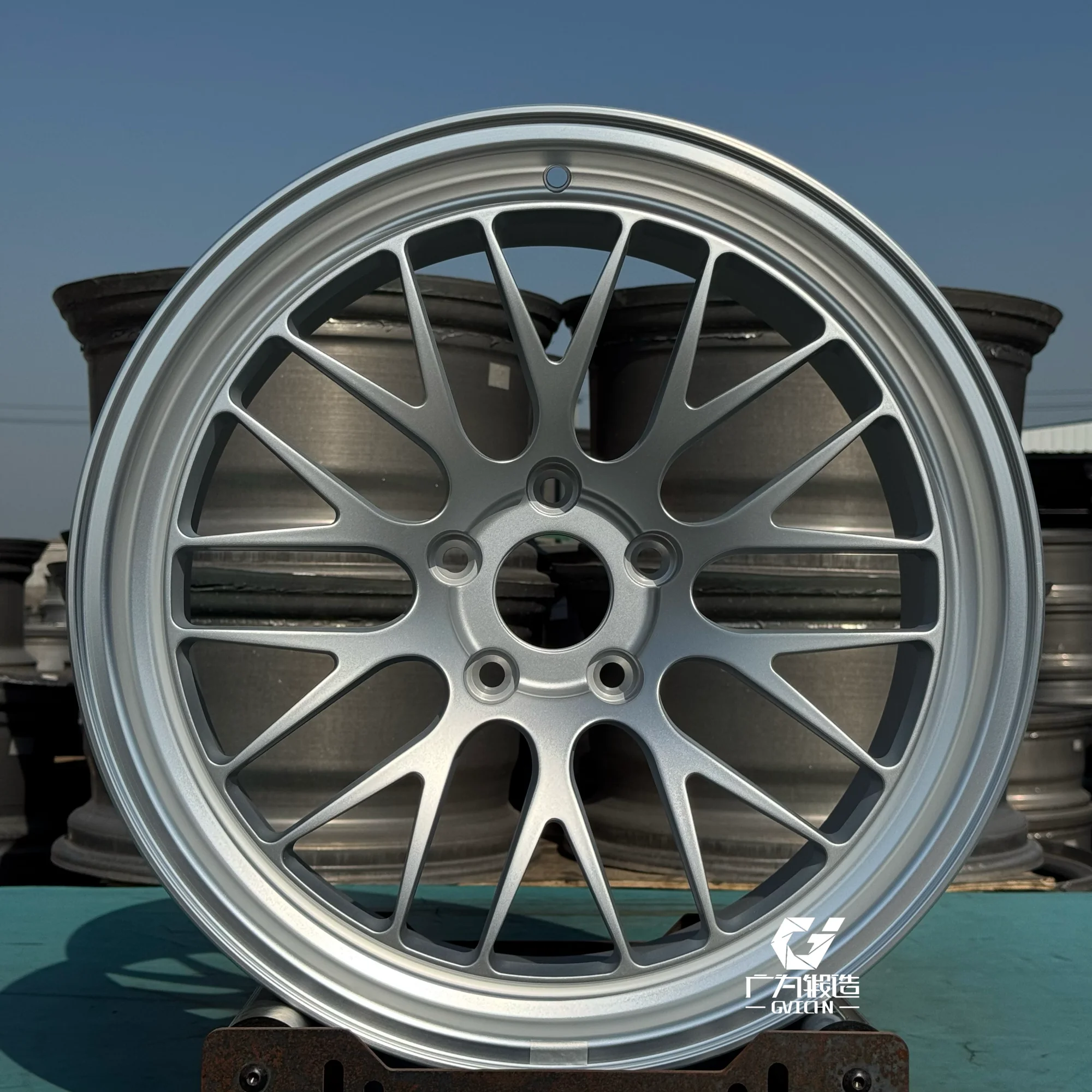
The superiority of forged wheels in strength-to-weight ratio stems from fundamental changes at the molecular level during production. While cast wheels are created by pouring molten aluminum into molds where it cools and solidifies, forged wheels undergo extreme pressure that compacts and realigns the metal's grain structure into highly directional patterns. This forging process eliminates porosity, increases material density in critical stress zones, and creates a wheel that can achieve equivalent or superior strength while using significantly less material. The result is not simply a manufacturing preference but a physics-based advantage that translates directly into performance benefits for vehicles ranging from daily drivers to high-performance sports cars.
The Metallurgical Foundation of Forged Wheel Strength
Grain Structure Transformation Through Forging Pressure
The superior strength of a forged wheel originates in the fundamental transformation of aluminum alloy grain structure under extreme pressure. During the forging process, which typically applies pressures exceeding 10,000 tons, the aluminum billet undergoes severe plastic deformation that breaks down the original coarse grain structure and realigns it into elongated, directional patterns. These refined grains become tightly packed and oriented along the primary stress paths of the wheel design, creating a fibrous structure similar to wood grain that resists crack propagation and fatigue failure far more effectively than the random, equiaxed grain structure found in cast wheels.
This grain refinement process increases the material's tensile strength by 20-30% compared to the same aluminum alloy in cast form. The forging pressure also works any impurities and inclusions toward the surface where they can be machined away, while simultaneously closing micro-voids and porosity that inevitably occur in casting processes. The resulting material exhibits uniform density throughout the wheel structure, eliminating weak points that could serve as crack initiation sites under cyclic loading. The directionality of the grain flow can be strategically controlled during die design to follow the anticipated stress paths in the finished wheel.
Material Density and Porosity Elimination
Cast wheels inherently contain microscopic porosity created when dissolved gases come out of solution as molten aluminum cools and solidifies. These tiny voids, though often invisible to the naked eye, act as stress concentrators that reduce the material's effective load-bearing capacity. Even with advanced casting techniques like low-pressure casting or vacuum-assisted methods, complete elimination of porosity remains impossible. The forged wheel manufacturing process, by contrast, works with solid material from the beginning and uses compressive forces that actually close any existing voids, creating a denser, more uniform material structure.
This density advantage translates directly into mechanical performance. Testing shows that forged aluminum alloy exhibits material density approximately 3-5% higher than the same alloy in cast form, meaning more load-bearing material exists within the same volume. More significantly, the absence of porosity means the forged wheel can rely on the full theoretical strength of the aluminum alloy rather than a reduced effective strength compromised by voids. This allows engineers to design wheels with thinner cross-sections in non-critical areas while maintaining safety margins, directly contributing to weight reduction without sacrificing structural integrity.
Aluminum Alloy Selection and Heat Treatment Response
The forged wheel manufacturing process enables the use of higher-strength aluminum alloys that would be difficult or impossible to cast effectively. Alloys like 6061-T6, commonly used in forged wheels, contain higher levels of alloying elements like magnesium and silicon that provide excellent age-hardening response but create casting challenges due to their higher melting temperatures and increased tendency toward hot cracking. The forging process works these alloys in solid form, avoiding the metallurgical complications of casting while accessing their superior strength characteristics.
Furthermore, forged wheels respond more predictably and uniformly to post-forging heat treatment processes. The T6 heat treatment, which involves solution treatment followed by artificial aging, produces more consistent strength properties throughout a forged wheel compared to a cast wheel of similar design. This consistency means engineers can design closer to theoretical limits with confidence, reducing safety factor requirements and enabling additional weight reduction. The combination of alloy selection flexibility and superior heat treatment response gives forged wheels a 15-20% strength advantage before any design optimization occurs.
Weight Reduction Mechanisms in Forged Wheel Design
Optimized Material Distribution Through Precise Manufacturing
The weight advantage of forged wheels derives not only from material properties but from the manufacturing process's ability to place material exactly where needed. Forging dies can create complex three-dimensional shapes with varying wall thicknesses, allowing engineers to concentrate material in high-stress areas like spoke roots and rim flanges while minimizing material in lower-stress zones. This optimization is difficult to achieve in casting, where molten metal flow patterns, mold filling considerations, and solidification shrinkage limit design freedom and often require thicker, more uniform sections to ensure reliable mold filling.
Modern forged wheel designs employ finite element analysis to map stress distribution under various loading scenarios, then use this data to create optimized material distribution patterns. The forging process can reliably reproduce these complex geometries with tight tolerances, enabling spoke designs with variable cross-sections that transition smoothly from thick to thin. This design freedom, combined with the forged wheel's superior material strength, allows weight reductions of 15-25% compared to cast wheels of equivalent load rating and similar overall design intent.
Thinner Wall Sections Without Compromise
The superior tensile and fatigue strength of forged aluminum allows the use of thinner wall sections in both the barrel and spoke areas of the wheel. Where a cast wheel might require a 4mm wall thickness to meet strength and durability requirements, a forged wheel design might achieve the same performance with a 2.5-3mm wall. This seemingly small difference compounds across the entire wheel structure, creating substantial cumulative weight savings. The reduction is particularly significant in larger diameter wheels where the circumference and surface area of the barrel section become substantial.
These thinner sections also improve the wheel's response to impact loading. Counter-intuitively, the flexibility of thinner sections in a forged wheel can actually enhance durability by allowing slight deflection that dissipates impact energy, while the stronger material prevents permanent deformation or cracking. Cast wheels, being both thicker and less ductile, tend to exhibit more brittle behavior under impact, making them more susceptible to catastrophic failure when striking potholes or road debris. The forged wheel's combination of reduced mass and increased toughness creates a safety advantage alongside the performance benefit.
Reduced Machining Stock and Material Waste
The precision of the forging process produces near-net-shape components that require less subsequent machining to achieve final dimensions. While cast wheels typically require significant machining to true mounting surfaces, remove casting imperfections, and achieve dimensional tolerances, forged wheels emerge from the press much closer to final form. This precision reduces the amount of excess material that must be incorporated into the initial forging to account for machining allowances, contributing to overall weight reduction.
From a manufacturing perspective, this efficiency also means less material waste per wheel produced. While the forging process itself generates some flash material that must be trimmed, the total material waste is typically lower than in casting where risers, gates, and runners must be incorporated into each mold to ensure proper filling and feeding during solidification. This efficiency consideration becomes particularly relevant when working with higher-grade aluminum alloys where raw material costs are significant. The combination of less starting material and reduced machining requirements contributes measurably to the final weight difference between forged and cast wheels.
Structural Engineering Advantages of Forged Wheel Construction
Load Path Optimization and Stress Distribution
Engineers designing forged wheels can strategically orient the material's grain flow to follow anticipated load paths, creating a structure where the material's natural strength aligns with applied stresses. During the forging process, the metal flows in the direction of least resistance within the die cavity, and skilled die designers use this behavior to guide grain flow patterns. By analyzing how forces transfer from the tire contact patch through the wheel to the mounting hub, engineers create forging dies that produce grain flow following these stress paths, maximizing structural efficiency.
This load path optimization is impossible to achieve in casting, where grain structure forms randomly during solidification based on thermal gradients and cooling rates. The result is that a forged wheel structure works more efficiently as an integrated system, with each element contributing optimally to overall strength. Spokes can be shaped to act as efficient compression and tension members, while the rim section benefits from circumferential grain flow that resists the hoop stresses generated during tire inflation and cornering loads. This structural optimization allows the forged wheel design to achieve superior performance while using less material.
Fatigue Resistance and Service Life Extension
The cyclic loading wheels experience during normal service makes fatigue resistance a critical performance parameter. Every wheel rotation subjects the structure to fluctuating stresses as weight transfers around the circumference, while cornering, braking, and acceleration add additional load cycles with varying magnitudes and directions. The forged wheel's refined grain structure, freedom from porosity, and higher material ductility all contribute to superior fatigue performance compared to cast alternatives.
Laboratory fatigue testing typically shows forged wheels enduring 2-3 times more load cycles before crack initiation compared to cast wheels of similar design. This extended fatigue life provides a safety margin that becomes particularly valuable in demanding applications like performance driving, off-road use, or commercial vehicles where loading severity and frequency increase substantially. The absence of internal voids means cracks have fewer initiation sites and must propagate through uniform, tough material rather than jumping between existing discontinuities. This fatigue advantage allows forged wheel designs to meet or exceed safety standards with reduced material, contributing to their lighter weight while maintaining or improving durability.
Impact Resistance and Damage Tolerance
The superior ductility of forged aluminum, combined with optimized material distribution, gives forged wheels better damage tolerance when encountering road hazards. When a wheel strikes a pothole or curb, the impact generates localized stress concentrations that can exceed the material's yield strength. In a cast wheel, these stress concentrations often propagate as cracks through the brittle material structure, potentially leading to catastrophic failure. The forged wheel's tougher, more ductile material responds to impacts by yielding locally and absorbing energy through plastic deformation.
This damage tolerance means forged wheels are more likely to bend rather than break when overloaded, providing a safer failure mode that gives the driver warning and opportunity to respond rather than experiencing sudden complete failure. The ability to absorb impact energy also reduces the shock transmitted to suspension components and vehicle structure, potentially extending the service life of other chassis components. While no wheel is indestructible, the forged wheel's combination of strength and toughness provides a measurable safety advantage in real-world driving conditions where unexpected impacts occur.
Performance Implications of Reduced Wheel Weight
Unsprung Mass Reduction and Suspension Response
The weight reduction achieved by forged wheels directly impacts vehicle dynamics through unsprung mass reduction. Wheels, tires, brakes, and suspension components that move with the wheel assembly constitute unsprung mass, which is not isolated from road irregularities by the suspension springs and dampers. Every pound of unsprung mass reduction provides disproportionate handling benefits compared to sprung mass reduction, with some engineers estimating the dynamic benefit at 3-5 times that of equivalent sprung weight savings.
Lighter forged wheels allow suspension components to respond more quickly to road surface changes, maintaining better tire contact and improving both ride quality and handling precision. The reduced inertia means dampers can more effectively control wheel motion, preventing excessive bounce and maintaining optimal tire patch contact during rapid suspension movements. This improvement becomes particularly noticeable in performance driving situations where suspension response speed directly affects cornering capability, braking stability, and overall vehicle composure. The 5-10 pound per wheel weight reduction typical when switching from cast to forged wheels represents 20-40 pounds of unsprung mass reduction for a complete vehicle, creating measurable improvements in suspension effectiveness.
Rotational Inertia Reduction and Acceleration Response
Beyond simple mass reduction, forged wheels benefit from reduced rotational inertia because the weight savings occur primarily in the rim and outer spoke areas farthest from the rotation axis. Rotational inertia increases with the square of the radius, meaning weight removed from the outer diameter provides disproportionate benefits to acceleration and braking response. The lighter rim of a forged wheel reduces the energy required to change the wheel's rotational speed, effectively improving the vehicle's power-to-weight ratio without modifying the engine.
This rotational inertia reduction creates quantifiable acceleration improvements. Testing shows that a 10% reduction in wheel weight, concentrated at the rim, can improve 0-60 mph acceleration times by 0.1-0.2 seconds depending on vehicle weight and power output. The effect compounds in vehicles with multiple gear changes during acceleration, as the engine must overcome wheel inertia repeatedly. Braking benefits similarly, with reduced rotational inertia meaning the brake system can decelerate the wheels more quickly, potentially reducing stopping distances. These performance improvements make forged wheels particularly attractive for motorsport applications where every tenth of a second matters.
Fuel Efficiency and Real-World Economy Gains
The reduced mass and rotational inertia of forged wheels contribute measurably to improved fuel efficiency in real-world driving. The energy required to accelerate a lighter wheel package is permanently reduced, meaning every acceleration event from stops, during passing maneuvers, or when climbing grades requires less fuel. While individual savings per acceleration event are small, they accumulate over thousands of acceleration cycles during typical vehicle use, creating measurable efficiency improvements.
Independent testing of identical vehicles equipped with cast versus forged wheels has documented fuel economy improvements of 1-3% when using forged wheels, with greater benefits in urban driving where acceleration frequency is higher. These efficiency gains extend beyond fuel cost savings to reduced emissions and extended range in electric vehicles where reduced wheel weight directly translates to extended battery range. For commercial fleet operators or environmentally conscious consumers, the cumulative fuel savings over a wheel set's service life can partially offset the higher initial cost of forged wheels while providing performance and durability advantages.
Manufacturing Process Differences and Quality Implications
Forging Process Control and Consistency
The forging process for high-quality wheels involves precise control of multiple variables including billet temperature, press tonnage, die temperature, and forming speed. Modern forging operations utilize servo-electric or hydraulic presses with programmable control systems that ensure consistent forming parameters across production runs. This process control creates high part-to-part consistency, with mechanical properties varying by less than 5% across a production batch compared to the 10-15% variation typical in casting due to variables in pouring temperature, mold condition, and cooling rates.
The consistency of the forging process means each forged wheel meets design specifications with high reliability, allowing tighter engineering tolerances and more aggressive weight optimization. Quality control processes can focus on dimensional verification and surface finish rather than extensive material property testing, as the forging process inherently produces consistent material characteristics. This manufacturing repeatability contributes to the long-term reliability advantage of forged wheels, as the absence of process-related defects reduces the statistical probability of premature failure across a large production volume.
Post-Forging Machining and Finishing Operations
After the initial forging operation, forged wheels undergo precision machining to achieve final dimensions, create mounting surfaces, and produce cosmetic features. The material consistency and near-net-shape accuracy of forgings make these machining operations more predictable and efficient than machining cast wheels where internal porosity can cause tool chipping and surface finish problems. CNC machining centers can hold tighter tolerances on forged wheels, ensuring precise hub bore diameters, mounting pad flatness, and centerline runout that contribute to smooth, vibration-free operation.
The superior surface finish achievable on machined forged aluminum also provides a better base for subsequent finishing operations including painting, powder coating, or polishing. The absence of subsurface porosity means finishes adhere more consistently without the risk of pinholes or blistering that can occur when gas trapped in casting porosity expands during paint curing or when corrosive elements penetrate surface coatings and attack internal voids. This finish quality contributes to the long-term appearance retention of forged wheels, maintaining their aesthetic appeal throughout their service life.
Testing Standards and Certification Requirements
High-quality forged wheels undergo rigorous testing to verify their performance meets or exceeds industry standards and regulatory requirements. Common test protocols include radial fatigue testing, where the wheel undergoes millions of load cycles simulating extended service life, cornering fatigue testing that applies bending moments simulating lateral forces during cornering, and impact testing that verifies damage resistance when striking obstacles. The material properties and structural design of forged wheels typically allow them to pass these tests with significant margins over minimum requirements.
Certification standards like those published by SAE, TÜV, or JWL establish minimum performance criteria that wheels must meet for road use. Forged wheels designed and manufactured to these standards provide verified safety and durability, with test documentation confirming their suitability for specific vehicle applications and load ratings. The engineering margins built into forged wheel designs, enabled by their superior strength-to-weight ratio, mean they often exceed minimum standards by 50-100% or more, providing additional safety factors that become valuable in unexpected overload situations or after minor damage that might compromise a wheel operating closer to its limits.
FAQ
Can forged wheels crack or fail under normal driving conditions?
While forged wheels offer superior strength and durability compared to cast alternatives, no wheel is completely immune to failure under extreme conditions. Properly manufactured and maintained forged wheels from reputable manufacturers have extremely low failure rates under normal driving conditions. Their superior material properties, refined grain structure, and absence of porosity make them highly resistant to fatigue-induced cracking. However, severe impacts from potholes, collisions, or off-road obstacles can damage any wheel regardless of construction method. The advantage of forged wheels is their tendency to bend rather than shatter when overloaded, providing a safer failure mode. Regular inspection for cracks, bends, or other damage is recommended for all wheels regardless of construction type, particularly after significant impacts.
How much weight can I expect to save by switching to forged wheels?
The weight savings from switching to forged wheels varies significantly based on the specific wheels being compared, their size, design complexity, and the manufacturer's engineering approach. As a general guideline, forged wheels typically weigh 15-25% less than cast wheels of similar size and design intent. For a common 18-inch wheel, this translates to approximately 5-8 pounds per wheel, or 20-32 pounds total for a complete set of four. Larger wheels show more dramatic absolute weight differences, with 20-inch forged wheels sometimes weighing 10-12 pounds less than cast equivalents. The actual savings depends heavily on the specific models being compared, as some cast wheels with simple designs might weigh less than complex, feature-rich forged wheels. Weight specifications from manufacturers provide the most accurate comparison for specific applications.
Do forged wheels require special maintenance compared to cast wheels?
Forged wheels do not require fundamentally different maintenance procedures compared to cast wheels, though their superior finish quality and higher initial investment often motivates owners to be more diligent with care. Both wheel types benefit from regular cleaning to remove brake dust, road salt, and other contaminants that can damage protective finishes and cause corrosion. Periodic inspection for damage, including checking for cracks around spoke junctions and mounting areas, is recommended for all wheels. The main maintenance consideration specific to forged wheels is that their thinner wall sections and optimized designs mean any damage should be evaluated by qualified professionals, as even minor bends might affect structural integrity more significantly than in heavier cast wheels with larger safety margins. Professional refinishing or repair should only be performed by facilities experienced with forged wheel construction to avoid compromising their engineered properties.
Are forged wheels worth the additional cost for daily driving applications?
The value proposition of forged wheels for daily driving depends on individual priorities, budget, and how one values the performance, efficiency, and durability benefits they provide. For drivers who prioritize optimal handling response, acceleration, and ride quality, the unsprung mass reduction and rotational inertia benefits of forged wheels create noticeable improvements even in normal driving conditions. The fuel efficiency gains, while modest at 1-3%, accumulate over years of ownership and contribute to reduced environmental impact. The superior durability and fatigue resistance of forged wheels often results in longer service life, potentially offsetting some of the initial cost premium through extended replacement intervals. For vehicles where wheel replacement due to damage is common, the tougher damage tolerance of forged wheels may reduce long-term costs. However, for budget-conscious consumers using their vehicle primarily for basic transportation where performance nuances are less important, quality cast wheels from reputable manufacturers provide adequate performance at lower initial cost.
Recommended Products

 Hot News
-
Forged Carbon Products
2024-05-21
-
Forged Off-Road Accessories
2024-05-21
-
GVICHN Introduces Revolutionary Forged Two-Piece Product
2024-05-21
 ONLINE