Why 3-Piece Forged Wheels Are Preferred by Premium Automotive Brands
Premium automotive brands consistently choose 3-piece forged wheels for their high-end vehicles due to their superior engineering, customization capabilities, and performance advantages. These sophisticated wheel assemblies represent the pinnacle of automotive wheel technology, combining strength, lightweight construction, and aesthetic versatility that mass-produced cast wheels simply cannot match. The manufacturing process behind 3-piece forged wheels involves precision engineering that creates components capable of withstanding extreme stress while maintaining optimal weight distribution. Understanding why luxury manufacturers gravitate toward these wheels reveals the intricate balance between performance, durability, and visual appeal that defines premium automotive engineering.
Superior Manufacturing Process and Material Quality
Advanced Forging Techniques
The forging process used to create 3-piece forged wheels involves applying tremendous pressure to aluminum billets, compressing the material grain structure to achieve exceptional density and strength. This manufacturing method eliminates the porosity and air pockets commonly found in cast wheels, resulting in components that can withstand significantly higher stress loads. The forging process also allows manufacturers to control the directional grain flow within the aluminum, optimizing strength characteristics in critical stress areas. Premium automotive brands recognize that this manufacturing precision translates directly into improved safety margins and performance capabilities for their vehicles.
Each piece of a three-piece forged wheel undergoes individual forging operations, allowing engineers to optimize the material properties for specific functional requirements. The center section receives forging pressure patterns designed to handle bolt loads and rotational stresses, while the outer barrel and inner barrel sections are forged to manage tire mounting forces and lateral loads. This targeted approach to material optimization ensures that each component performs its intended function with maximum efficiency and minimal weight penalty.
Material Composition and Alloy Selection
Premium wheel manufacturers utilize aerospace-grade aluminum alloys specifically formulated for high-stress applications when producing 3-piece forged wheels. These alloys typically incorporate elements such as magnesium, silicon, and copper to enhance strength-to-weight ratios while maintaining excellent corrosion resistance. The material selection process considers factors including fatigue resistance, impact absorption, and thermal conductivity to ensure optimal performance across varied driving conditions. Luxury automotive brands appreciate that these advanced materials provide long-term durability that reflects positively on their vehicle quality reputation.
The heat treatment processes applied to forged aluminum components further enhance their mechanical properties, creating a molecular structure that exhibits superior resilience compared to cast alternatives. T6 temper heat treatment, commonly employed in premium wheel production, involves solution heat treatment followed by artificial aging to achieve peak strength characteristics. This controlled metallurgical process ensures consistent material properties throughout each wheel component, providing the reliability that premium automotive manufacturers demand for their flagship vehicles.
Customization Capabilities and Design Flexibility
Modular Construction Advantages
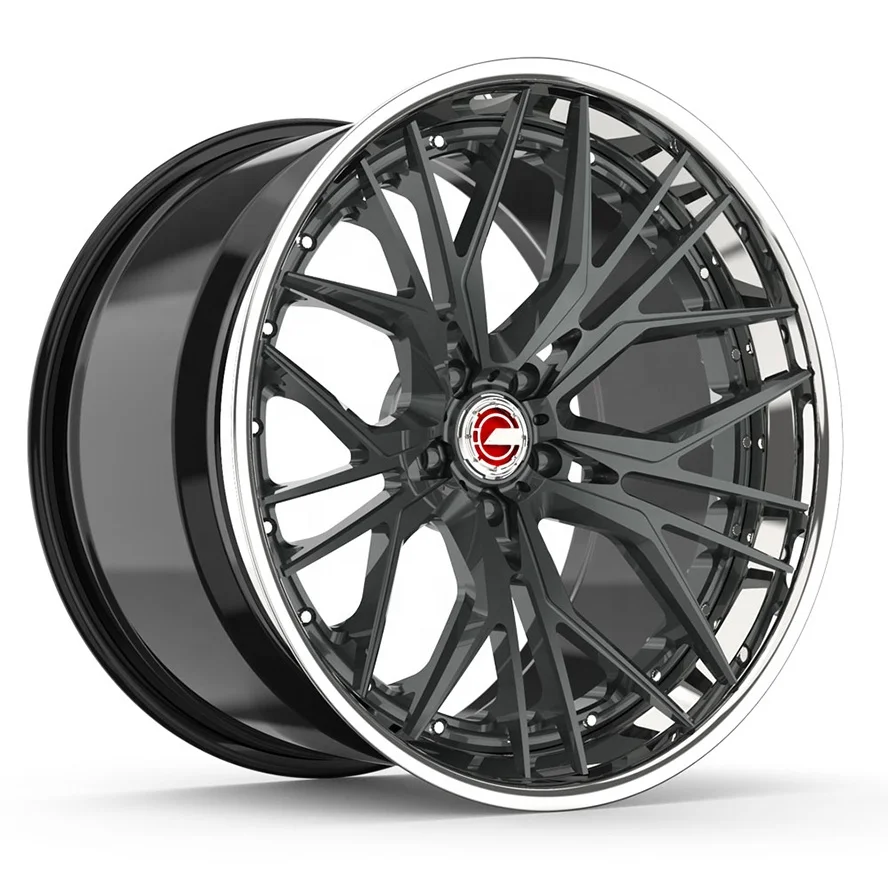
The three-piece construction of forged wheels enables unprecedented customization possibilities that appeal to premium automotive brands seeking to differentiate their vehicles. Each component can be manufactured with different specifications, allowing engineers to create unique offset configurations, width variations, and aesthetic combinations without developing entirely new tooling. This modular approach significantly reduces development costs while expanding design possibilities, making it economically viable for luxury manufacturers to offer exclusive wheel designs for limited production vehicles.
Premium brands can specify different finishes for each wheel component, creating sophisticated multi-tone designs that complement their vehicle aesthetics. The center section might feature brushed aluminum finishing while the barrels receive polished or painted treatments, resulting in visually striking combinations impossible to achieve with one-piece construction methods. This design flexibility allows automotive manufacturers to create cohesive visual themes that enhance their brand identity and vehicle appeal.
Size and Fitment Optimization
The modular nature of 3-piece forged wheels enables precise fitment optimization for specific vehicle applications without compromising design integrity. Manufacturers can adjust barrel widths, offsets, and center bore dimensions to accommodate unique suspension geometries, brake clearance requirements, and aesthetic preferences. This capability proves particularly valuable for premium automotive brands that frequently update their vehicle platforms while maintaining consistent wheel design themes across their product lines.
The ability to modify individual components also facilitates the creation of staggered wheel configurations commonly found on high-performance luxury vehicles. Different front and rear wheel widths can be achieved by utilizing various barrel combinations with identical center sections, maintaining visual continuity while optimizing tire contact patches for enhanced performance. This engineering flexibility supports the sophisticated suspension tuning that characterizes premium automotive engineering.
Performance Benefits and Engineering Advantages
Weight Reduction and Unsprung Mass Optimization
Premium automotive brands prioritize 3-piece forged wheels because their reduced unsprung mass directly improves vehicle dynamics, acceleration, and braking performance. The forging process creates components with higher strength-to-weight ratios compared to cast alternatives, allowing engineers to remove material from non-critical areas without compromising structural integrity. This weight reduction translates into improved suspension response, reduced rotational inertia, and enhanced fuel efficiency that aligns with luxury vehicle performance expectations.
The distributed weight characteristics of three-piece construction enable engineers to optimize mass placement for improved rotational dynamics. Strategic material placement can lower the wheel's moment of inertia while maintaining necessary strength characteristics, resulting in quicker acceleration response and more precise steering feedback. These performance improvements contribute to the refined driving experience that distinguishes premium vehicles from mainstream alternatives.
Structural Integrity and Safety Margins
The bolted assembly method used in 3-piece forged wheels creates redundant load paths that enhance overall structural integrity compared to welded or cast alternatives. High-strength fasteners distribute loads across multiple connection points, reducing stress concentrations that could lead to catastrophic failures. Premium automotive manufacturers value this enhanced safety margin, particularly for high-performance applications where wheels experience extreme loading conditions during aggressive driving maneuvers.
Quality control procedures for three-piece forged wheels typically exceed industry standards, with each component undergoing individual inspection before assembly. This multi-stage quality assurance process identifies potential defects that might be masked in one-piece construction methods, ensuring that only components meeting stringent specifications reach premium vehicle applications. The ability to replace individual damaged components also provides long-term serviceability advantages that appeal to luxury vehicle owners.
Economic Considerations for Premium Manufacturers
Production Scalability and Tooling Efficiency
While 3-piece forged wheels require higher initial investment compared to cast alternatives, their modular construction provides significant economic advantages for premium automotive brands producing multiple vehicle variants. The ability to utilize common center sections across different wheel sizes reduces tooling costs and inventory complexity while maintaining design consistency. This scalability becomes particularly valuable for luxury manufacturers offering extensive customization options or limited production variants.
The forging tooling used for individual components can be optimized for specific production volumes, allowing manufacturers to achieve cost-effective production even for relatively small quantities. This economic flexibility supports the business model of premium automotive brands that often produce vehicles in limited numbers while maintaining high profit margins. The ability to amortize tooling costs across multiple applications enhances the financial viability of offering forged wheel options.
Brand Differentiation and Market Positioning
Premium automotive brands utilize 3-piece forged wheels as tangible evidence of their commitment to engineering excellence and attention to detail. The visible quality differences between forged and cast wheels provide marketing advantages that justify premium pricing strategies. Customers purchasing luxury vehicles expect components that demonstrate superior craftsmanship, and the sophisticated engineering behind three-piece forged construction delivers compelling evidence of value that supports brand positioning.
The exclusivity associated with forged wheel technology reinforces the premium nature of luxury vehicles, contributing to brand desirability and customer satisfaction. Many premium manufacturers highlight their forged wheel specifications in marketing materials, using the technical superiority as a differentiating factor against competitors. This marketing value extends beyond the immediate performance benefits, contributing to long-term brand equity and customer loyalty.
FAQ
What makes 3-piece forged wheels stronger than cast wheels
The forging process compresses aluminum grain structure under extreme pressure, eliminating porosity and creating denser material with superior strength characteristics. Unlike casting, which can create air pockets and inconsistent material density, forging produces components with controlled grain flow that optimizes strength in critical stress areas. The three-piece construction also distributes loads across multiple connection points, creating redundant load paths that enhance overall structural integrity.
How do premium brands customize three-piece forged wheels for different vehicles
The modular construction allows manufacturers to combine different barrel widths, center sections, and offset configurations without developing new tooling for each application. Premium brands can specify unique finishes for each component, create staggered wheel setups, and adjust fitment parameters to match specific vehicle requirements. This flexibility enables extensive customization while maintaining cost-effective production for even limited-run luxury vehicles.
What are the long-term maintenance advantages of 3-piece forged wheels
Individual components can be serviced or replaced without discarding the entire wheel, providing significant cost savings for premium vehicle owners. The bolted assembly allows for refinishing operations on specific components, restoration of damaged barrels, or upgrade modifications. Quality control procedures for each piece before assembly also ensure higher reliability and longer service life compared to one-piece alternatives.
Why do 3-piece forged wheels cost more than other wheel types
The forging process requires specialized equipment and higher material costs compared to casting methods, while the three-piece assembly involves additional manufacturing steps and quality control procedures. However, premium automotive brands justify this investment through improved performance, enhanced customization capabilities, superior durability, and the marketing value of demonstrating engineering excellence that supports their luxury market positioning.
Recommended Products
 Hot News
-
Forged Carbon Products
2024-05-21
-
Forged Off-Road Accessories
2024-05-21
-
GVICHN Introduces Revolutionary Forged Two-Piece Product
2024-05-21
 ONLINE